

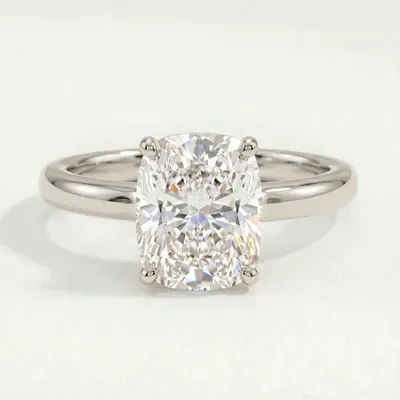
White gold engagement rings offer a refined balance between contemporary brightness and traditional craftsmanship. Their cool, silvery appearance complements diamonds and colourless gemstones beautifully, while the underlying gold alloy provides the prestige associated with fine jewellery. Yet two rings that appear almost identical can differ significantly in durability, finish, maintenance requirements and everyday comfort.
Before choosing a design, it is worth understanding how the metal will behave beyond the showroom. Couples beginning their search can view white gold engagement rings at Lily Arkwright to compare how different settings, stone shapes and band profiles interact with white gold’s clean, polished appearance. A considered choice should suit not only the centre stone, but also the wearer’s lifestyle and long-term expectations.
Check the Gold Purity and Alloy Composition
White gold is created by combining yellow gold with naturally white metals to produce a paler, stronger alloy. In Britain, engagement rings are commonly made in 18-carat white gold, which contains 75% pure gold. This gives the ring a luxurious feel while maintaining enough strength for secure stone setting.
Lower-carat alloys may offer increased hardness, but they contain less pure gold and can feel less substantial as a fine-jewellery choice. For an engagement ring intended to be worn daily, 18-carat white gold is often preferred because it balances richness, durability and visual refinement.
It is also sensible to ask whether the alloy contains nickel, palladium or another whitening metal. Some wearers are sensitive to nickel, making a nickel-free or palladium-based composition more comfortable. The precise alloy can also influence the ring’s underlying colour once the surface finish begins to wear.
Understand the Rhodium Finish
Most white gold engagement rings receive a rhodium coating. Rhodium is a bright, highly reflective metal that gives the ring its crisp white finish and enhances the brilliance of the centre stone.
This coating is not permanent. Over time, friction from everyday wear may gradually reveal the warmer tone of the white gold beneath, particularly along the underside of the band and around raised edges. This is not a defect; it is a normal characteristic of rhodium-plated jewellery.
Replating can restore the original brightness, although the frequency depends on lifestyle and personal preference. Someone who works frequently with their hands may notice wear sooner than someone who removes their ring during practical tasks. Buyers who prefer minimal maintenance should consider whether they are comfortable with occasional professional refinishing.
Match the Setting to Daily Wear
White gold’s neutral tone works with almost every engagement-ring style, but the setting should be selected with practicality in mind. Fine claws can create a delicate appearance and allow more light to reach the stone, while heavier claws may offer greater reassurance for an active wearer.
A high-set solitaire can make the centre stone appear especially prominent, yet it may catch on clothing more easily. A lower-profile setting generally feels more secure and streamlined. Similarly, a halo or pavé band introduces additional brilliance, but the smaller stones require more careful cleaning and inspection.
Band width also affects how the ring looks and feels. A slender band can make the centre stone appear larger by contrast, whereas a wider band offers stronger visual presence and may feel more balanced beneath a substantial stone. The best proportion is not simply the largest stone or thinnest band; it is the combination that looks intentional on the wearer’s hand.
Final Thought
A white gold engagement ring should be assessed as a complete piece of jewellery rather than chosen solely for its bright colour. Gold purity, alloy composition, rhodium maintenance, setting height and band proportions all influence how the ring performs over time.
The strongest choice is one that feels elegant in photographs but remains comfortable, secure and practical in everyday life. By examining these details before purchasing, buyers can select a white gold engagement ring that retains its beauty while fitting naturally into the wearer’s routine.
